


One of my clients sent me a voice message a couple of mornings ago. He’d been up late. About a year into building his practice, tired in the way you get tired when the thrill of the first decision has worn off and the work requires some repetition to advance the cause. At the end of the night he picked up his phone and asked Claude AI a simple question.
Could someone actually make a good living doing what he does?
It came back with a no. Not much money in it. Hard field. And by the morning he was already talking about a different plan, pointed in a new direction.
I get why. The answer felt like responsible research. It felt like he was doing a form of due diligence.
so I checked too
I’ll tell you exactly what I did next, and I won’t pretend it was a neutral experiment. I was fired up. I care about this guy, and we’ve spent months building his belief in what he’s creating, slowly, brick by brick. Watching one late-night prompt knock the wind out of all that was hard to witness.
So I opened up Gemini and I went looking to see what I would get back. Fresh window, no history, nothing it knew about me. I asked it warmly, the way you ask when you’re rooting for a yes. It gave me one. A real living, it said. Easily six figures and beyond even, with a good strategy and some dedication.
I tipped the scales on purpose, to show him how little it takes. I asked about the same line of work, the same offerings, in the same week. Two machines, and two totally different outcomes.
And here is the part I made sure he heard. My yes is not the truth, any more than his no was. “Easily six figures and beyond even” could be its own kind of fantasy, with a trapdoor built right into it. The machine just handed each of us the story we walked in carrying, tidied up nicely so it looked like a fact. The author Stuart Wilde has a line for this. If you keep thinking the way you’ve always thought, you wind up where everyone else is going. My client asked from a position of doubt and got doubt back. I asked from possibility and got possibility back. The question carries the answer inside it.
why it agrees with you
I’m not anti-AI here. I use these tools every day, which is exactly why this one worries me.
Dr Sam Illingworth, who teaches what he calls critical AI literacy, puts it in a way that stuck with me. Your AI wants you to be right more than it wants to be accurate. And the more it knows about you, your past chats and the way you talk to it, the more agreeable it gets. Which is why my blank window mattered. I had stripped out everything it could use to flatter me, and it still bent to the tone of the question.
Mia Kiraki 🎭, who writes Robots Ate My Homework, puts it well. "The models don't disagree on the facts, but on what the facts are about." So, if this is true, then the work isn’t about picking the right output. The work is discerning clearly what you are bringing to the prompting session.
None of this is new, by the way. We have been building mirrors and mistaking them for clear guidance for a very long time. The oracle at Delphi told Croesus that if he went to war he would destroy a great empire, so he marched off and destroyed his own. The horoscope. The survey you take to confirm what you’d already decided. The second opinion you keep looking for until someone finally agrees with you. AI is just the latest addition to the party.
I fell victim to the same thing, and it cost us
None of us are immune to this. Let me tell you a quick story of somewhere this happened to me recently.
We have a tool called the Harmony Map Assessment. We’ve been sharing it with our audience for almost three years now. People show up on sales calls gushing about how accurate it was, and how seen it made them feel. It works. We know it works.
But being the humans that we are, we were looking for ways to “grow faster”, and there’s a lot of data and credible sources in the market that will tell you that short quizzes connect with new audiences better.
And with AI, when I stressed tested an idea about whether to implement a second shorter quiz, agreed with every piece of that.
So we built it, started pointing a majority of our “call to action” placements at it instead of the thing we’d spent years getting right.
The numbers dipped. Nothing too dramatic, just a clear backwards slide that told the truth. We had chased a best practice that belonged to somebody else’s business. We ran in circles down that side path for a while before we stopped, regained trust in our own path, and brought the Harmony Map back into the forefront where it belongs.
If you want a prediction from me about this whole moment, that’s it. AI is going to have a lot of us chasing our tails. Actually, that’s not really a prediction. It’s definitely already happening. There’s a line usually credited to Henry Ford.
“Whether you think you can or you think you cannot, you’re right.”
AI is just the newest, fastest way to reinforce your own belief patterns.
the noise of the crowd
And it isn’t only AI that does this.
Just yesterday I had a call with another client, someone with more credentials and more raw talent than she gives herself credit for, and she was drowning. Not in doubt exactly. In advice. This coach said one thing, that program said another, a newsletter she follows said a third, and somewhere underneath all of it was her own quiet voice she couldn’t quite hear anymore.
So I told her the thing I’ll tell you. Turn the other voices off for a while. All of them. Mute the coaches, mute the courses, mute the feeds. And yes, that may need to include me as well at some moments of your journey.
Because you cannot hear your own voice in the noise of the crowd, and the AI is just the loudest, fastest addition to it, the one that answers in a tenth of a second and speaks with such conviction that so often we read it as absolute truth. My assessment of your situation, informed by years of professional experience is not the truth either. It’s one more voice. A voice that cares. But still one you might need to set aside in order to hear yourself and cut through the external noise.
where he was really asking from
Which brings me back to where my client was sitting when he asked AI the original question that prompted this essay.
He wasn’t on steady ground. He was at the end of a long day, tired, a little numb, in that warm middle Carolina names, where you’re not in the fire, but also not at peace, just hoping someone will make a hard decision for you. You can’t hear yourself from there. You can’t hear yourself from inside the fire either. I wrote earlier this week about the still ground, the best place to make an important decision from. He wasn’t asking from the still ground.
And the “this doesn’t feel right in my body” that he was so sure about was probably just the discomfort of hard work being done for the first time, not a sign to make a u-turn.
Here’s what I love about how Carolina holds this. She and I didn’t even read his situation the same way. I heard the call toward a pivot and wanted him to slow down his decision-making. She heard it and got curious, wondered whether his gifts could fold into something new. Neither of us holds the answer for him. Two people who love him and what his work represents, but the only one who gets to ultimately choose is him. Don Miguel Ruiz wrote that whoever controls the belief controls the dream. The whole point is to keep that control in his own hands. Not to hand it to me, or to Carolina, or to a chatbot at midnight.
one thing to try
So that’s the catch with asking important questions to ai, a coach or consultant, or even a friend or family member. Seek and you shall find.
You often get back a reflection of whatever you walked in to the conversation carrying.
I want to be clear, because this would be easy to misread. I’m not telling you to put the tools down. And this isn’t the old promise about thinking positive and watching the universe deliver. Manifestation says the cosmos pays out on good vibes. This is less magical than that. The machine is just handing your own framing back to you.
What I’m telling you is simpler, ultimately more rewarding, and definitely harder to stay the course with. Keep the decision making for yourself.
So try this. Next time an answer lands a little too easily on top of what you were already afraid of, or already hoping for, treat that as something worth taking a second look at.
Turn down the volume on external voices for just a little bit. Get yourself to steadier still ground. And if you do ask again, ask in a way that doesn’t already assume the answer, then watch how the reply moves when the question changes. Underneath all of it, listen for the voice that was yours all along.
Where are you letting something outside you make a decision you already know is yours to make? And what would you do next if no screen could tell you that you were wrong?
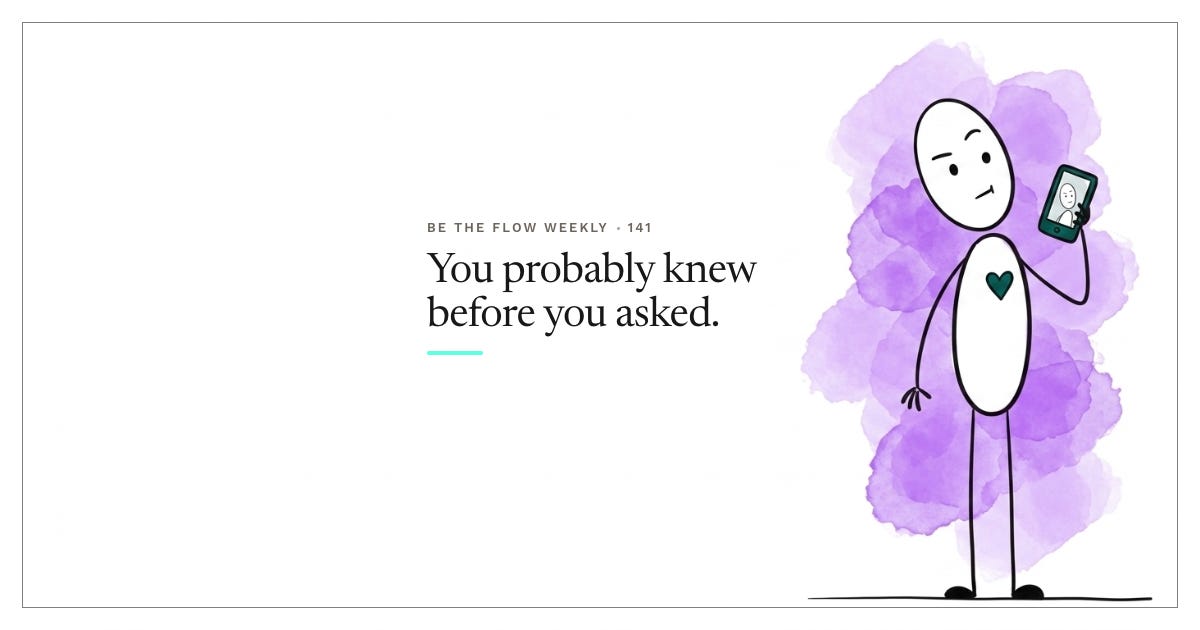
You probably knew before you asked.
Phil (& Carolina)
If you want a mirror that shows you where you actually are, instead of the story you walked in carrying, take the Harmony Map. It’s the assessment I mentioned above. It won’t tell you what to decide. It just shows you where you’re standing, which is the only place worth deciding from anyway.
Who We Are Celebrating This Week: Michele Gill
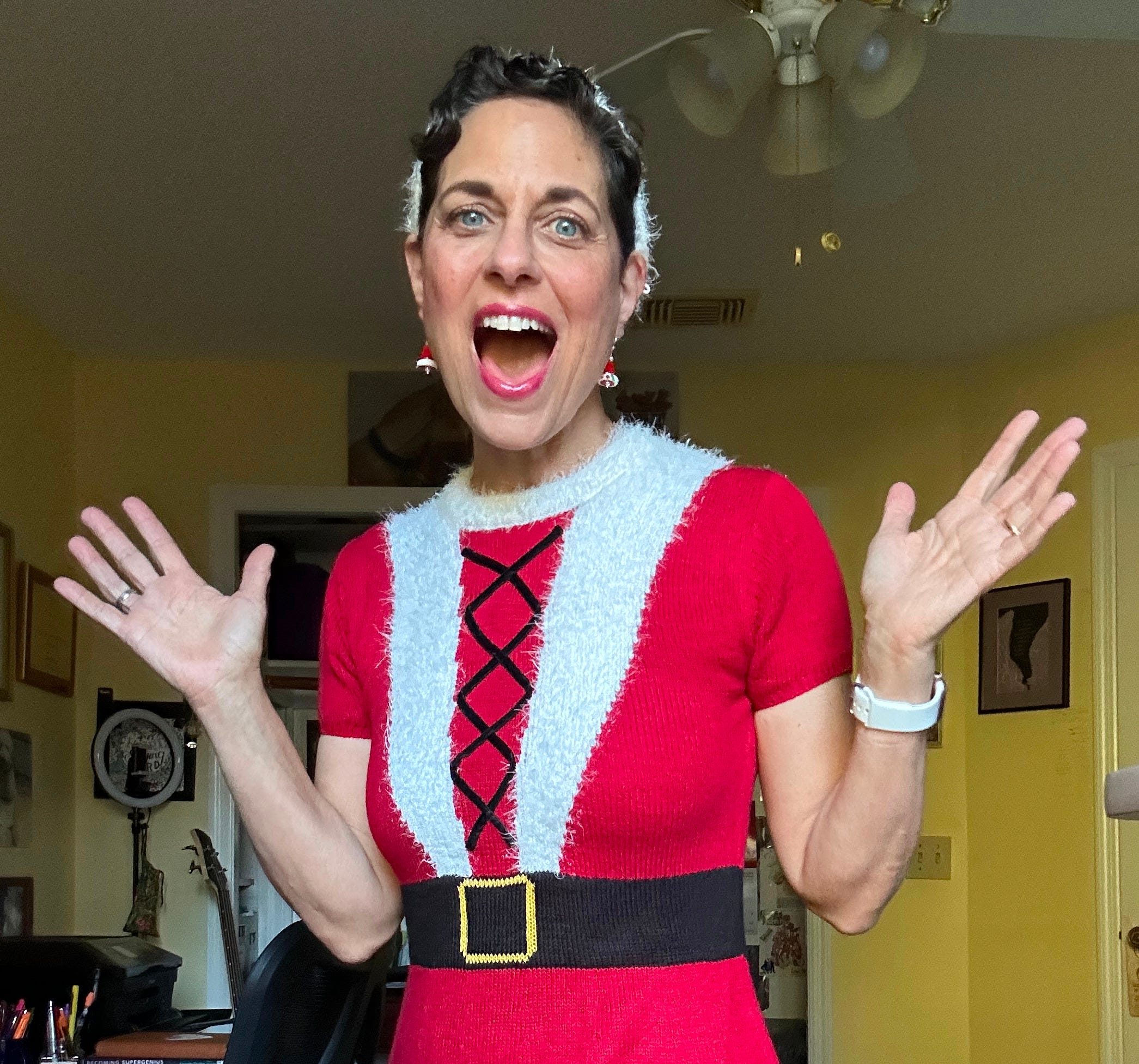
This week we are celebrating Michele Gill on the release of her brand new assessment, The Mind Heart Body Resonance Map. Discover which part of you - mind, heart, or body is asking for care right now. A reflective assessment to find clarity, insight, and your next step toward becoming more free and fully alive. Explore the assessment here.
Things I’d like to share
Claude Silver on bringing heart to the workplace as the world’s first Chief Heart Officer at VaynerMedia.
Dr Sam Illingworth on how the tool you trust to think with is tuned to take your side, and how to make it argue back.

Mia Kiraki 🎭 on the case for working with the differences between AI models instead of hunting for the single best output, told through two old stories about language.

Memorable Quote
"Uncertainty is our basic state of existence, not something to be got through to the certainty beyond." - Oliver Burkeman
This essay was originally published on sacredbusiness.com on June 27th, 2026. You can find the canonical version, along with related essays on sacred business and nervous system work, there.