


A few years ago, I was helping a coach fill a retreat.
We’d been promoting it for about two weeks. A whole sequence of emails had gone out, and with a couple of days left, there were still a handful of spaces available.
So we looked at who we hadn’t heard from.
Past clients. People who’d come to his workshops. Others who already knew his work and seemed likely to be interested.
Around a hundred of them hadn’t opened any of the emails.
I suggested he reach out personally and let them know he’d thought of them. Make sure they’d received the information.
Within about 48 hours, the retreat filled.
Some of the people he contacted checked their email and discovered the messages had been going into their promotions folder. They hadn’t known the retreat was happening. They were grateful he’d reached out.
I told this story on a coaching call last week because we were talking about personal invitations and the point where they start to feel like too much.
It’s easy to look at a launch like that and think: I’ve already sent ten emails. Surely reaching out again would be bothering people.
But sending a message and someone receiving it are two different things.

And the experience we imagine someone will have can be very different from the one they actually have.
“I don’t want to bother people” can come from a caring place.
You’ve been on the receiving end of pressure. You know what it feels like when someone treats your hesitation as an objection they need to overcome. You want people to feel free around you.
That is important. I want to preserve that sensitivity.
I also want us to look carefully at what happens when it keeps us from making an invitation at all.
You think of someone who could benefit from your work. You begin writing a message. Then you feel the discomfort of making your intention clear.
Until now, you’ve been having a lovely conversation. Now you’re about to say there’s something you offer, and it costs money.
You can feel how much you want it to go well.
So you leave that part out. Maybe you’ll mention it another time, when it feels more natural.
The immediate relief can make that decision feel right. But what have you learned about whether the person wanted to hear your invitation?
Very little. They haven’t had a chance to respond.
Discomfort deserves our attention. We still need to understand what it’s telling us.
Sometimes there is a good reason to pause. The offer doesn’t fit what the person has shared. You’re reaching out because you need a sale, and you’re struggling to hear anything else. Or they’ve already declined, and you’re looking for a way around their answer.
Those are things to take seriously.
Other times, you have a relevant invitation and a willingness to respect their decision. What feels uncomfortable is allowing your work, and your desire to be paid for it, to become visible.
That’s worth noticing too.
The retreat story doesn’t mean every follow-up will be welcome or that hesitation should always be pushed through. It gives us one concrete example of how an assumption can keep us from finding out.
The people who joined got to decide once they knew the opportunity existed.
There’s a small practice here.
Think of one person you’ve been hesitating to contact. Look honestly at why you thought of them and whether what you offer connects to something they’ve actually expressed.
If it does, make a simple invitation. Give them enough information to choose, and leave space for their answer.
You may still feel nervous after you press send. You can be nervous and listen well.
This is part of what Carolina and I mean by building a business from the inside out. We bring our values into the way we act, and we pay attention to what taking action reveals.
Tomorrow, Martha Beck joins us on Sacred Business Stories, and this is one of the questions I’m looking forward to exploring with her:
How do we distinguish the discomfort of going against ourselves from the discomfort of bringing more of ourselves forward?
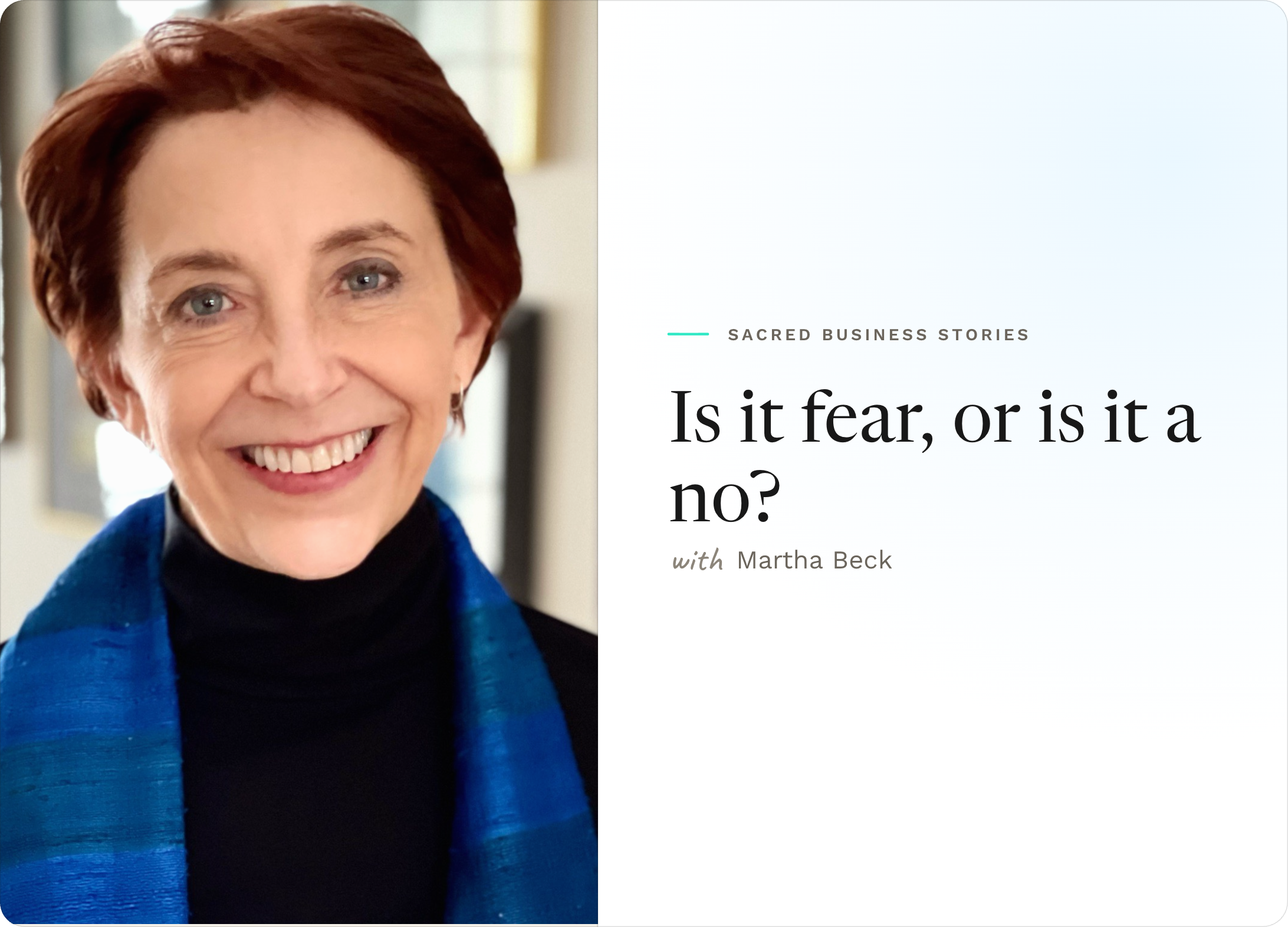
Martha is the author of The Way of Integrity and Beyond Anxiety. We’ll be talking about self-trust, meaningful work, and how to move when you don’t feel entirely ready.
Join us live Wednesday, November 4 →
Bring a decision you’ve been second-guessing. I’d love to explore it together.
Love,
Phil

