


Everything Is Connected · Part II of VII
“It’s sort of a running joke in Brazil that if you don’t know what to do with your life, you choose business administration.”
Carolina told me that once, looking back on the choice she’d made at university. She was good at doing what was expected of her. When it came time to decide what to study, she could see why business administration made sense. She had a much harder time saying what she actually wanted to do.
After university, she moved from Brazil to Canada and built a good corporate career. She lived in a beautiful neighborhood in Montreal near the Saint Lawrence River. She got to travel, eat at wonderful restaurants, and enjoy a level of comfort she’d worked hard for.
And the longer she did it, the more often she found herself wondering, Is this it? Why am I spending so many of my hours doing work I don’t enjoy?

I came to a similar question by a different route.
One of my earliest memories is sitting on my dad’s lap in front of a PC. He worked for IBM, so we had a computer at home long before anyone else I knew. I fell in love with it. I loved finding out what I could make it do.
That curiosity eventually became a consulting business. I could go into different industries and use what I knew about technology to get results. People started calling it my Midas touch. I liked hearing that. I liked being useful, and I liked seeing what I could pull off.
I also got very good at pushing myself. At events and masterminds, I’d compare myself with other entrepreneurs. Then I’d go back to work and put even more of myself into whatever I was building at the time. I kept thinking the next thing I achieved would finally let me feel good about what I’d already done.
Carolina had gotten good at following a path that made sense to the people around her. I’d gotten good at turning my abilities into business results. In both cases, what we were good at got to decide what we did next.
That’s part of what we mean by the fragmented path. You take on work because you’re good at it. You say yes because someone needs you, or because the money is good. Each decision has a seemingly great reason backing it up. Years can go by before you examine those choices next to each other and ask what they’re building towards in your life.
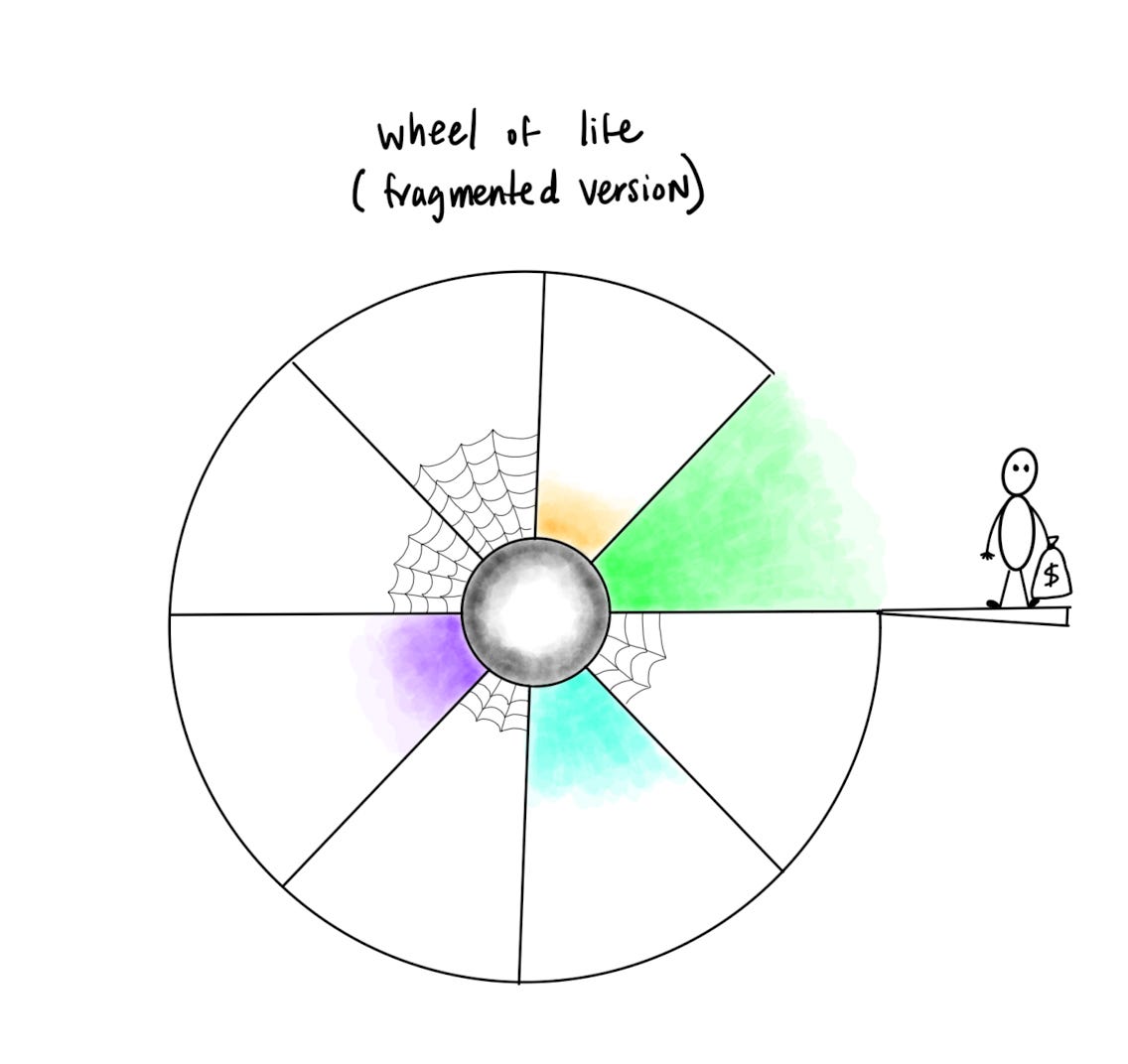
That can happen while you’re working a job and imagining what you might build next. It can happen years into a practice, when people still come to you for something you’d be happy to do less of.
Either way, when you’ve spent years getting good at several things, the question can be surprisingly hard to answer. What do I actually want to offer?
Here’s where I’d start. Think about what people already come to you for, whether they’re colleagues, clients, or people who know you well.
What’s one thing they ask for help with that you’d genuinely like to do more of?
Write down one time this happened. What did the person come to you for? What could they do or decide after you helped them? Then look at which part of that you’d be fired up to do again with more people in your world. That’s a clue about what you might offer.
Choosing what you’d like to offer can tell you something about yourself. So can the moment you go to name the price. In Part III, we’ll look at what the business can show you about habits you learned long before you started building towards it.
Next in the series · Part III: Everything is connected. And your business is the mirror… → (coming next tuesday)

