

Everything Is Connected · Part IV of VII
I once met an entrepreneur who told me he had 50 projects underway.
Fifty. All at different stages. He was still working his day job, and he hoped one of those projects would eventually take hold and give him a way to do the work he really wanted to do.
I understood the appeal. As long as you keep all the possibilities open, you can imagine any of them working. Pick one and you have to give it hours you could have spent on something else. You have to tell somebody what you’re doing. You might even have to ask them to pay you for it.
A job can give you the stability to try an idea. The question is what you do with the time you have. If you give a little of it to 50 projects, it’s hard to give any one of them enough attention to find out what it could become.
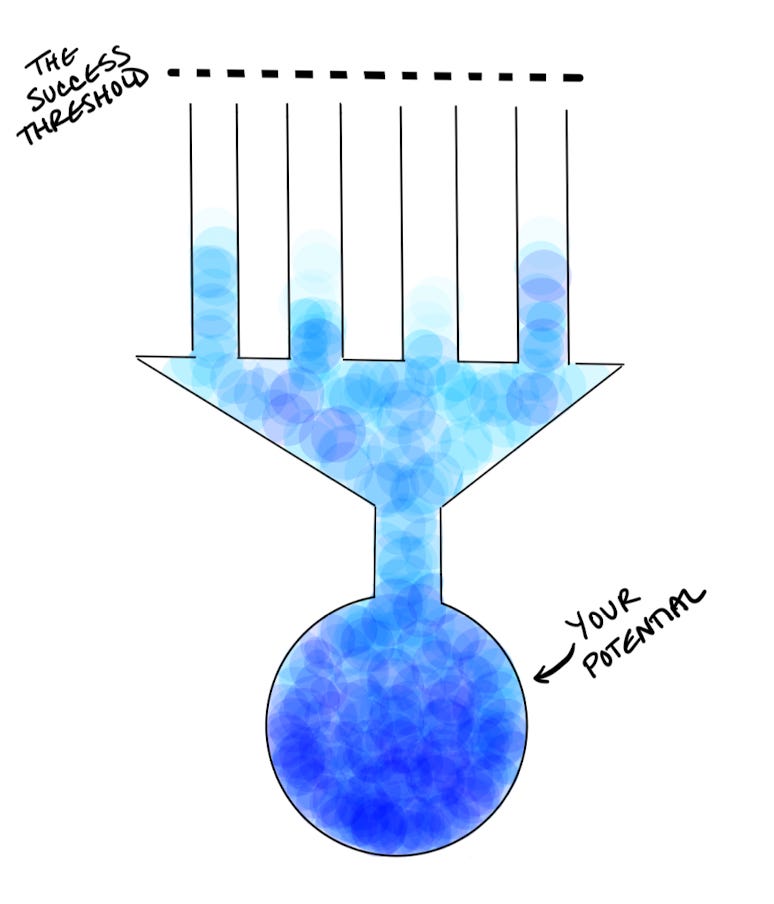
I’ve had my own version of this. I knew I could get results in different kinds of businesses. For a long time, the fact that I could make something work was enough of a reason for me to do it. I rarely stopped to ask whether I wanted more of the work that would come with it.
That’s what I mean by building opportunistically. You see an opening and it starts to set your direction. Someone else’s group program is selling, so you sketch one out. You see a creator doing well on a new platform and start planning what you’ll publish there. Pretty soon you’re making decisions about a business you never sat down and chose.
When Carolina and I talk about building a Sacred Business, we start with the work you feel called to do and the life you want it to support. An opportunity can help you build toward both. Before you say yes, ask yourself:
If this works, do I want more of the business it will create?
Picture the week that comes with it. Who are you helping? What are people paying you to do? How much of your time will it take to serve them well? You might still say yes. You might change what you’re offering before you do.
One of the reasons I sought out Michael Singer as a teacher was the way he talked about giving himself wholeheartedly to the work in front of him. I was used to looking for the move that would get me somewhere better. Here was someone who took the work in front of him seriously and trusted life enough to give it his attention.
I think about that when a new idea shows up right around the time an existing one starts asking more of me. It’s exciting to think about a new offer. It takes a different kind of willingness to tell someone about the offer you’ve already made, ask to be paid, and hear what they say.

That’s the Love-Led Leap as I understand it now. You choose a direction you care enough about to give it a fair try. Then you take a step that lets you learn what happens as life gives you feedback.
If you have several ideas competing for your time, pick one piece of work you’d like to do more of. Think of one person it could help. Tell them what you’re considering and ask whether it speaks to a problem they’re facing. Give yourself a chance to hear their answer before you go back to the list.
In Part V, I’ll return to the health scare that opened this series and tell you what I started choosing differently afterward. Carolina was beginning to ask a question of her own, one she still asks the people she works with today.
Next in the series · Part V: I felt my mortality staring me in the face →
P.S. If you have a few good ideas and can’t tell which one deserves your attention, that’s what we built the Clarity Compass™ for. It helps you choose one focus, decide what can wait, and name your next three actions.

