


Skipping the usual format this week. There's something being announced next week that I wanted you to understand first. This is that.
She said it so plainly it took me a second to hear it.
“I feel so much better. But nothing in my life is actually changing.”
She’d done the work. Years of it. Therapy, somatic practice, breathwork, meditation. She was calmer, more grounded, more able to sit with discomfort without running. And the book still wasn’t written. The thing she’d been carrying was still exactly where she’d left it.
After that conversation, I started watching for the pattern. And I kept finding it. The calmest people I saw moving through our community were often the most stuck. Not the beginners. Not the people in crisis. The ones who’d done the most.

That troubled me.
Some were mid-exit from a professional life that no longer fit, building something new on the side while managing an existing identity. Some were carrying something half-built they couldn’t quite finish and couldn’t quite abandon. All of them were sincere. Almost none of them were moving.
I spent a long time thinking the inner work was supposed to solve this. Get calm enough, clear enough, do enough healing work, and action follows naturally.
That’s what I believed for longer than I’d like to admit.
Then Carolina Wilke showed me what she was actually observing, and it reframed the whole picture for me.
There’s a difference between regulating for calm and training for expansion. They’re not the same practice and they don’t solve the same problem. Most nervous system work, the real kind, the kind that helps you stop spiraling and get good sleep, is designed to bring you back to baseline. To discharge tension in your system.
To return you to safety. That’s essential when you’re overwhelmed. It’s not what you necessarily need when something is trying to grow.
The thing you want to create requires you to become someone you’re not yet. Your nervous system reads that as risk and does exactly what you’ve trained it to do. It finds calm. Efficiently. Reliably. Every time.
What I’ve come to understand, watching person after person and even observing it in myself, is that we can start using our most sincere practices to stay close to the fire without walking into it.
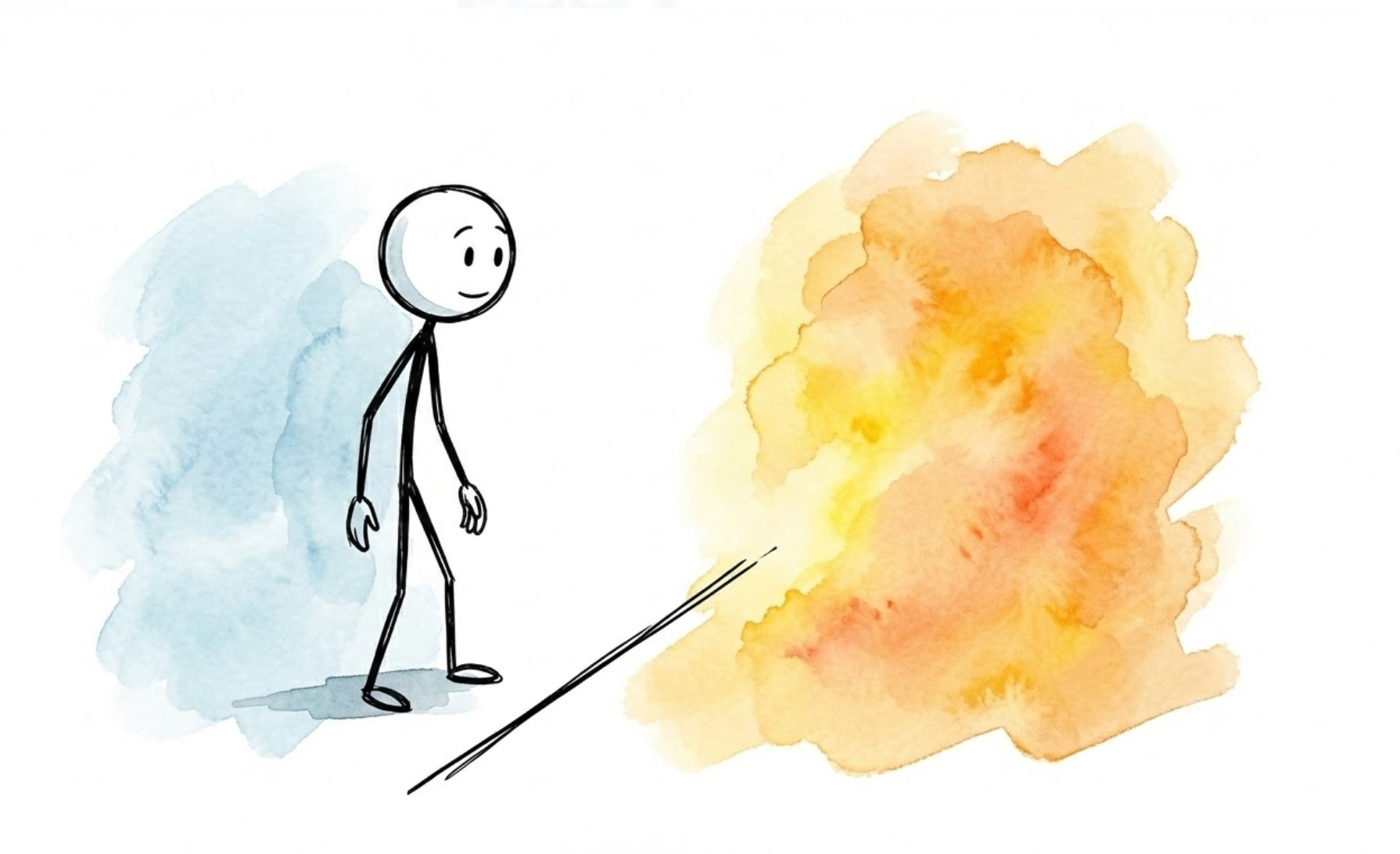
“I should be grateful for what I have” becomes the thought that silences what’s asking to grow.
The desire doesn’t go away. You just get better at settling it back down.
Which raises something I’ve not heard anyone say out loud:
at what point does managing a desire become indistinguishable from deciding not to have it?
Our practices can become the most sophisticated avoidance systems we’ve ever built. I say that having watched it happen in people I deeply respect. I also say it having recognized the same pattern in myself.
The commitment to inner work is real. The grounding practices are real. And somewhere along the way, for a lot of us, these quietly became the reasons we didn’t have to find out what lies on the other side of genuine desire.
And so we wait for the calm that we think will feel like clarity. For the moment the discomfort will lift enough that acting will feel safe.
That moment doesn’t come. Not because something has gone wrong.
Because you’ve been asking one practice to do what a different one was built for.
What Carolina has been developing over six years of private work is a practice built for exactly this. Not regulation. Expansion. Not returning to safety. Learning to stay when everything in you wants to retreat.
It’s less abstract than it sounds. Sometimes a sequence runs for ten minutes straight. The mind wants to move on. The body wants relief. The instruction is to stay. Not to force. Not to push through on willpower. To stay with what’s present until the discomfort becomes familiar rather than a reason to stop.
That’s what gets trained.

And what gets trained shows up in your life. We have watched people walk out of a session and have the sales conversation they’d been avoiding. Not because they pumped themselves up. Because they’d just spent an hour building evidence, in their own body, that they can remain present when it’s uncomfortable.
The nervous system that learned to stay with these practices for ten minutes is the same one that can stay with the discomfort of sending the email, posting the work, saying the thing they’ve been wanting to say but avoiding.
The practice made it available.
You’ve done the work. None of it is wasted. This moment has brought you exactly to this edge, which is the only place this next thing can start.
The years were preparation for a threshold that preparation alone can’t cross.
Part of you has never actually believed you couldn’t do this. What you’ve believed is that doing it would cost you something you weren’t sure you could afford. That belief was protecting you. Whether what it was protecting you from is still as dangerous as it once felt, that’s a question only you can answer, and only by testing it.
Next week, Carolina is opening something we’ve spent three years building toward. If what I’ve described here feels familiar, watch for it.
If you want to, comment and tell us this: not what you’re trying to build, but what you’ve been telling yourself is the reason it hasn’t happened yet. Not so we can try to fix anything. Just so we understand what we’re actually working with.
What I haven’t resolved here, and genuinely can’t, is what it means to have practiced staying safe so skillfully and for so long that safe stopped feeling like a choice.
You stopped feeling protected. You just felt like yourself. That’s the question worth sitting with after you close this. Not whether you’re ready to move. But who you’ve been being while you waited.
This is definitely a perspective I haven’t heard before and it lands. It makes sense. And it could also help explain why so many practitioners in the healing spaces aren’t bringing in the prosperity they should be.
For me, I think the biggest reason I tell myself “it hasn’t happened yet” is my lack of commitment, lack of consistent energy and effort. If I keep changing my mind about what I’m building, how can I expect it to grow?
Such a great differentiation! Calm vs. expansion. Or maybe calm as well as expansion.