


At five am Saturday morning, I was on Zoom with a small group of aspiring ecstatic dance DJs and two teachers in Bali.
I had questions.
How do I send full, rich sound from Traktor through Zoom while Carolina guides the movement from another microphone? What am I supposed to do with years of Spotify playlists that don’t simply appear inside professional DJ software? How do I begin experimenting without buying a small mountain of tracks I may never use?
The answers exist online.
I could ask AI how to configure Zoom. YouTube could teach me what every button on my controller does. There are more tutorials, playlists, equipment reviews, and technical explanations available than I could consume in a lifetime.
And I joined a live course with two beautiful humans.
Because access to information isn’t the bottleneck.
I need a structure that turns scattered tricks into skill. I need experienced eyes on what I’m doing, people who can answer the question underneath my question, and a place where I’m expected to practice.
One of our teachers explained that he and his partner had learned to DJ through years of experimentation and friends showing them isolated techniques. When they created this training, they had to work backward and ask:
How do we give someone the foundation we never had?
That landed with me.
There is a massive difference between collecting instructions and becoming capable.
AI made information abundant. Implementation is still the bottleneck.
On a recent community coaching call, someone was describing a new offer she wanted to create.
She had a thoughtful process. There was plenty she could teach. She was trying to decide how much information to include and how to price it.
Then she named the real promise: within four weeks, the thing her clients had been postponing would finally be booked on the calendar.
That was the offer.
Her clients weren’t buying four weeks of information. They were buying the structure, support, and momentum required to make something happen.
I think this distinction matters more every with each passing day.
AI has made information nearly infinite and instantly available. Whatever you want to learn, you can get an explanation in seconds. You can ask follow-up questions, request examples, simplify the language, and generate a plan before your coffee gets cold.
This is wonderful.
It also means information alone carries less value than it used to.
The valuable part is increasingly what happens after someone understands.
Can they decide which advice applies to them?
Will they practice long enough to develop real ability?
When the plan meets an actual human being, an actual market, or an actual nervous system, can they adjust?
Most importantly, will something become real because they learned it?
Your clients probably don’t need another library of information
This doesn’t mean courses are dead or that people should stop learning.
My DJ training includes lessons, demonstrations, music, and technical instruction. I need every bit of that.
The information has its place because it belongs to a larger container. We practice. We bring questions. Our teachers watch what we’re doing and help us correct it. At the end of the course, we will DJ for one another.
There is a point where hiding behind the lesson is no longer available.
You have to touch the equipment.
You have to make the transition between two tracks.
You have to let someone critique your set.
This is the question I would ask about almost any transformational offer now:
What will be operating in someone’s life when this is finished that isn’t true today?
Maybe the offer is live.
Perhaps the difficult conversation has finally happened, or the book has reached an editor. Someone who has spent years struggling to make a decision may now know exactly what they’re choosing.
That is where the value lives.
Your frameworks still matter. Your knowledge matters. The depth of your training may be exactly why you can see what someone else cannot.
And your client is rarely buying access to everything you know.
They’re buying the change your knowledge helps them make.
We built Your First Yes around this
This is the principle Carolina and I built into Your First Yes, an eight-week experience for thoughtful, capable people who already have meaningful work inside them but haven’t yet turned it into one clear offer, real invitations, and a paying client.
We built it the same way we teach.
We started with conversations. We listened carefully, shaped the offer, put a real price on it, and invited people to join before announcing it to our full list.
The first cohort filled.
Now we’re turning our attention toward helping those participants get results. We’ll watch what works, pay attention to where they need more support, and let the lived experience improve what comes next.
We haven’t announced the date of the next cohort yet.
If you have a real body of work and want support turning it into a clear offer people can say yes to, you can put your name on the early-interest list.
Join the Your First Yes waitlist →
Information may help you see the path.
Movement is how the path gets made.
Who we’re celebrating: AI Meets Girlboss 🦩
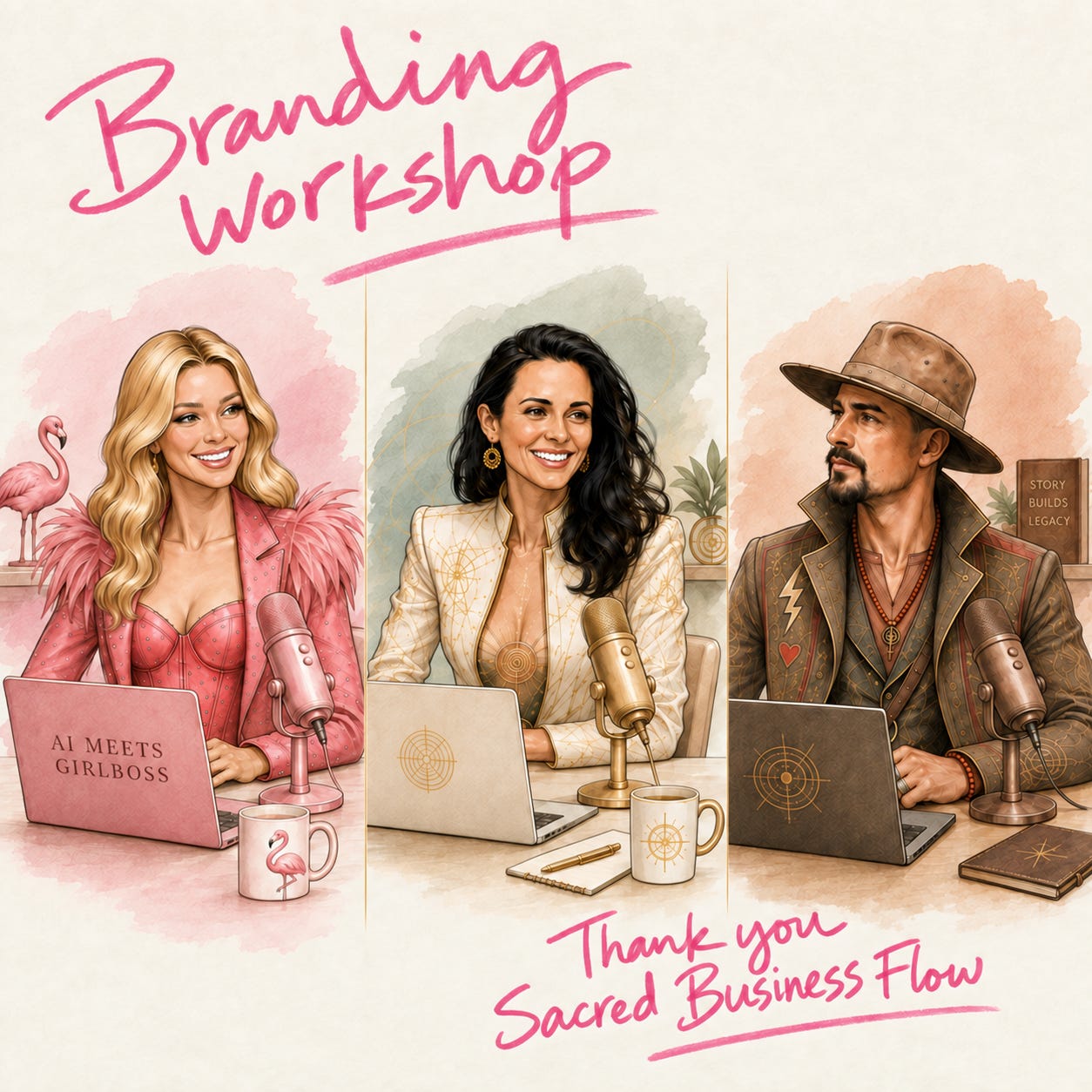
This week, we’re celebrating Pinkie from AI Meets Girlboss, who recently became a Substack bestseller and then joined us to lead a workshop for members of the Sacred Business Network.
Pinkie has spent ten years working in branding. She now helps independent creators use AI to build recognizable brands without hiring a full agency or turning visual identity into a second full-time job.
Her workshop was excellent!
She showed us the four decisions that keep a brand from being reinvented every time you publish: who you are, who you’re speaking to, how you sound, and the visual world that carries the message.
Her advice for anyone beginning was refreshingly simple. Start with voice. Once you know what you stand for and who you’re talking to, choose one visual symbol and a color that people can begin associating with you.
Taking this approach can definitely make content creation faster. Once the important decisions have been made, you stop staring at an empty canvas and debating every font, illustration, and cover image from scratch.
The complete replay is now available inside the Sacred Business Network, our paid Substack community, along with our private podcasts, workshops, and member conversations.
If you want a brand that feels distinctive without disappearing into months of branding work, this is a genuinely useful place to begin.
Join the Sacred Business Network and watch the workshop →
The Weekly Highlights
The Exact 6-Step Visual Branding Workflow Pinkie Uses With Every Client
Most AI-generated brand visuals look random because people begin generating images before they have made the underlying decisions. Pinkie shares the clarity-first process she uses to turn a loose idea into a repeatable visual system.
If AI keeps changing your images, every cover feels disconnected, or creating one image takes longer than writing the post, save this one.

Can a Paid Substack Actually Replace Your Salary?
Our paid Substack brings in roughly $10,000 a year. That is meaningful income, and it remains a small part of our larger business.
In this essay, I ran the numbers behind replacing a $5,000 monthly salary with paid subscriptions, including the audience size, conversion rates, fees, and financial runway most cheerful bestseller stories leave out.
It’s a realistic look at when a paid publication can support you and why building close to the work is often the steadier place to begin.
Can a paid Substack actually replace your salary?

A couple of weeks ago, we ran a flash sale on our paid Substack membership.
Mose: Live in Florianópolis, Brasil
This set has been in my ears as I begin my ecstatic dance DJ training. It’s a beautiful example of music becoming a journey rather than a collection of tracks.
I’ve been listening closely to the way Mose lets the energy build, soften, and gather again. If you want something to accompany a long walk, a slow Sunday, or a little movement in your own living room, begin here.
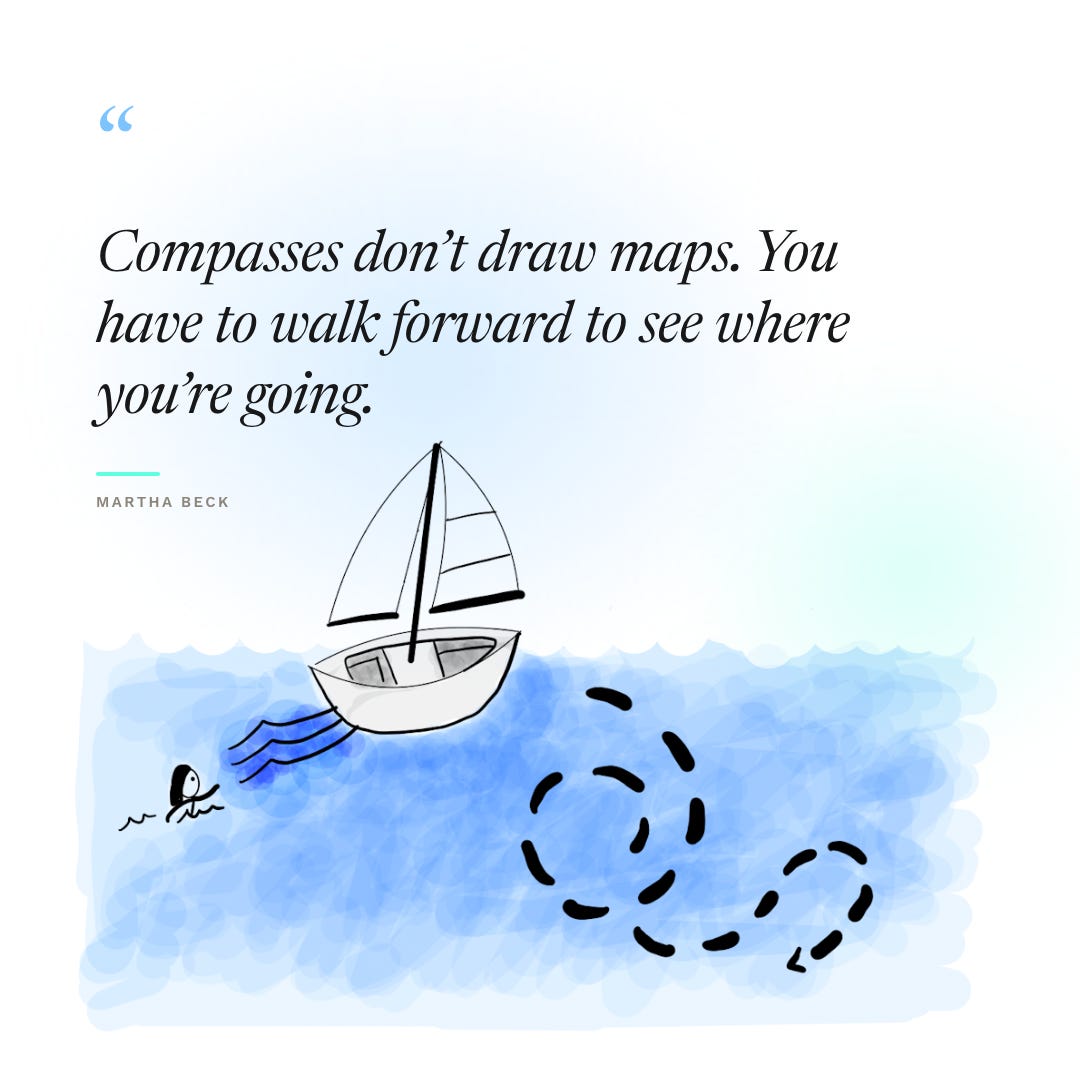
Memorable Quote by Martha Beck

Very well said! Just shared