


I Shut Down a $100,000-a-Month Business
In 2007, I was working at Intuit, the company behind TurboTax and QuickBooks.
I was making excellent money. I had stock options. By most measures, I had already built a very good life.
Then I read The 4-Hour Workweek and discovered Leo Babauta’s writing at Zen Habits.
Those ideas gave me a different picture of success.
I wanted control of my time.
I wanted to travel, pursue my interests, and decide how I spent my days.
That vision led me into entrepreneurship.
And eventually, it worked beyond anything I had imagined.
I built a business serving doctors in the hearing-care industry. At its height, it generated more than $100,000 a month.
It was just me and a virtual assistant.
I remember thinking, Holy crap. I created this.
But eventually, the business reached a threshold.
I was the bottleneck.
The only way to keep growing was to hire a team, add management, and build the machinery required to run a much larger company.
That was the obvious next step.
It was also the moment I realized I did not want the life on the other side of that decision.
I had built a successful business I no longer wanted to own
I was bored.
I had solved the problem. I knew how to produce the result, and I did not want to spend the next decade producing more of it.
The business increasingly felt like an obligation. I was chained to my desk, burned out, and dealing with health and autoimmune issues.
One bitterly cold day in Boston, snow was coming down hard and I felt physically awful.
I remember thinking:
If I did this once, I can do it again on my own terms.
There was some wisdom in that.
There was also plenty of ego.
I had worked hard and built something valuable. I had also entered the right niche when Facebook ads were beginning to take off. Demand was strong. The timing was excellent. Some beginner’s luck had been on my side.
I underestimated how long it would take to rebuild around work I genuinely loved.
Then I made the least strategic decision imaginable.
I shut the business down.
No succession plan.
No transition.
No attempt to find a buyer.
I was so frustrated that I essentially said, “Fuck it. I’m done.”
The revenue tanked almost immediately.
There were things I could no longer afford. Rebuilding took years. And I still kick myself for failing to sell what was probably a very valuable asset.
The decision to leave was right.
The way I left was reckless.
That distinction matters.
I am not suggesting that you blow up a profitable business because you feel frustrated. Pause. Do the reflection. Run the numbers. Explore your options. If you have built a valuable asset, sell it rather than abandoning it in a Boston snowstorm.
But I have never regretted refusing to spend the rest of my life inside that business.
Every business model has a life hidden inside it
After closing the business, I began attending retreats and spending more time in Costa Rica.
My life became more interesting, even while my income became less predictable.
Before closing the hearing-care business, I had invited Leo Babauta to teach at one of my retreats.
One day, we were out in the surf near Jacó when he asked what I did.
I told him how I helped businesses grow.
He said, “Oh man, I think I could use that help too.”
That conversation changed something for me.
Nearly two decades later, Carolina and I sat down with Leo Babauta again to talk about beginning before you’re ready, resistance, AI, and the complicated meaning of growth.
I realized there was an entire world of creators, teachers, and transformational practitioners who needed the business skills I had developed.
These were people I wanted to serve.
They were doing work I found meaningful.
They were living closer to the way I wanted to live.
That eventually became the foundation for the business and life I have now.
The financial tradeoff was real, and the path forward was slower and less predictable than I imagined.
But the work became more meaningful, and my life became far more interesting and enjoyable.
Here is the lesson:
Revenue tells you whether a business can make money. It does not tell you whether you will enjoy the life required to keep making it.
Most people choose a revenue goal first.
Then they adopt the offers, funnels, content plans, team structures, and growth strategies they believe will get them there.
They never stop to ask what happens if the plan works.
Do you want the ordinary day your strategy is creating?
Imagine your current business succeeds beyond your expectations.
It is ten years from now.
What does an ordinary day look like?
How are you spending your working hours?
Who are you spending them with?
How much time goes toward the work that gives you energy?
How much goes toward managing people, systems, delivery, and complexity?
Can you travel when you want to?
Do you have time and attention for your family?
How does your body feel?
Are you still close to the work and the people you wanted to help?
Or did success promote you into a job you never wanted?
These questions are more useful than asking how large your business could become.
A low-ticket offer requires volume.
Volume requires reach, conversion systems, and customer support.
A large membership requires ongoing acquisition and retention.
A large company requires leadership, management, and responsibility for other people’s livelihoods.
None of those models are wrong.
Some people are genuinely called to build large organizations. They love developing teams, setting direction, and creating something far bigger than themselves.
But scale is a business model.
It is not a moral achievement.
The opportunity is to choose the model that supports the life you actually want.
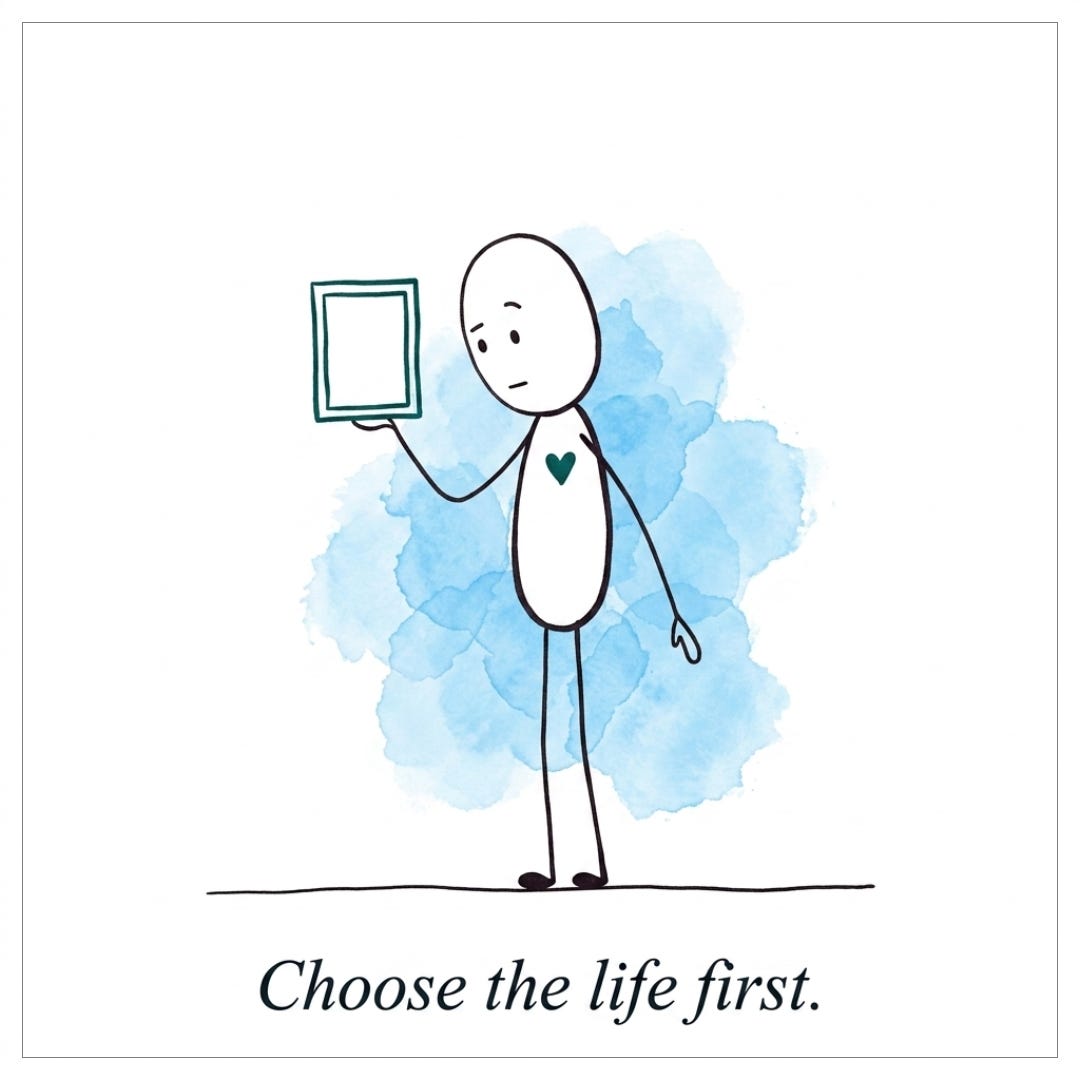
Start with the life. Then run the business math backward from there.
Suppose you want to generate $20,000 a month.
You want to work approximately 25 hours a week, stay close to the people you serve, travel freely, and avoid managing a large team.
You may need one primary offer priced between $3,000 and $5,000.
That means four to seven sales a month.
To make those sales, you need a clear group of people with a meaningful problem you are especially equipped to solve.
You need an excellent offer, a way to reach the right people, and a simple rhythm of invitations, conversations, and follow-up.
You might need a modest audience, several strong referral partners, and one excellent assistant.
You probably do not need five offers, daily content, a complicated funnel, or thousands of customers.
One audience.
One primary offer.
One simple way of finding and inviting the right people.
That can create a serious business.
For many transformational practitioners, consistent $10,000, $20,000, or $30,000 months would change everything.
They could care for their bodies, spend more time with their families, travel, create, and contribute.
They could make decisions based on their values instead of financial pressure.
Their gifts would help people and support their own lives.
That business does not become less meaningful because it stays small.
Complexity does not make it more legitimate.
Your first yes should prove more than demand
This is why your first yes matters.
It proves that someone will pay for the work.
It also gives you evidence about the business taking shape around it.
Did you enjoy serving this person?
Did the offer allow you to do your best work?
Did the price support the depth of attention required?
Can you find and invite more people like them in a way you can sustain?
If this offer succeeds, will it move you toward the life you want?
Your first offer will evolve. Your first client does not determine your future.
But every yes gives you data.
Use that data to build deliberately.
The goal is bigger than proving you can sell something.
You are looking for evidence that your deeper work can become a clear offer, create sustainable income, and support a life you genuinely want to live.
Before you scale the business, choose the life.
Then build accordingly.
Where is your business out of harmony?
You may already sense that something about your business feels harder, more complicated, or less satisfying than it should.
That does not automatically mean you need a better funnel or another offer.
The friction may be showing you that the inner work, the business structure, and the life you want are pulling in different directions.
The free Harmony Map Assessment helps you see the pattern, identify what is creating friction, and understand where your attention belongs next.
It takes about eight minutes.
Most people finish it thinking:
“That explains a lot.”
Take the Free Harmony Map Assessment →
See the pattern. Find the friction. Move your deeper work forward.
