


Alex Hormozi built one of the fastest-growing businesses in internet history. Last week, he sat across from Tony Robbins and admitted he feels empty.
I’m not bringing this up so you’ll feel sorry for him. I’m bringing it up because he’s the logical endpoint of advice you’ve likely been on the receiving end at some point.
Hormozi is the bro marketing king. Millions of followers across platforms. The guy who wrote the book on $100M offers. He represents the dominant philosophy of how to build: push hard, execute constantly, outwork everyone, figure out happiness later.
He did exactly that. And “later” arrived. He’s 36 with more money than he could spend, asking Tony Robbins on camera how to actually enjoy his life.
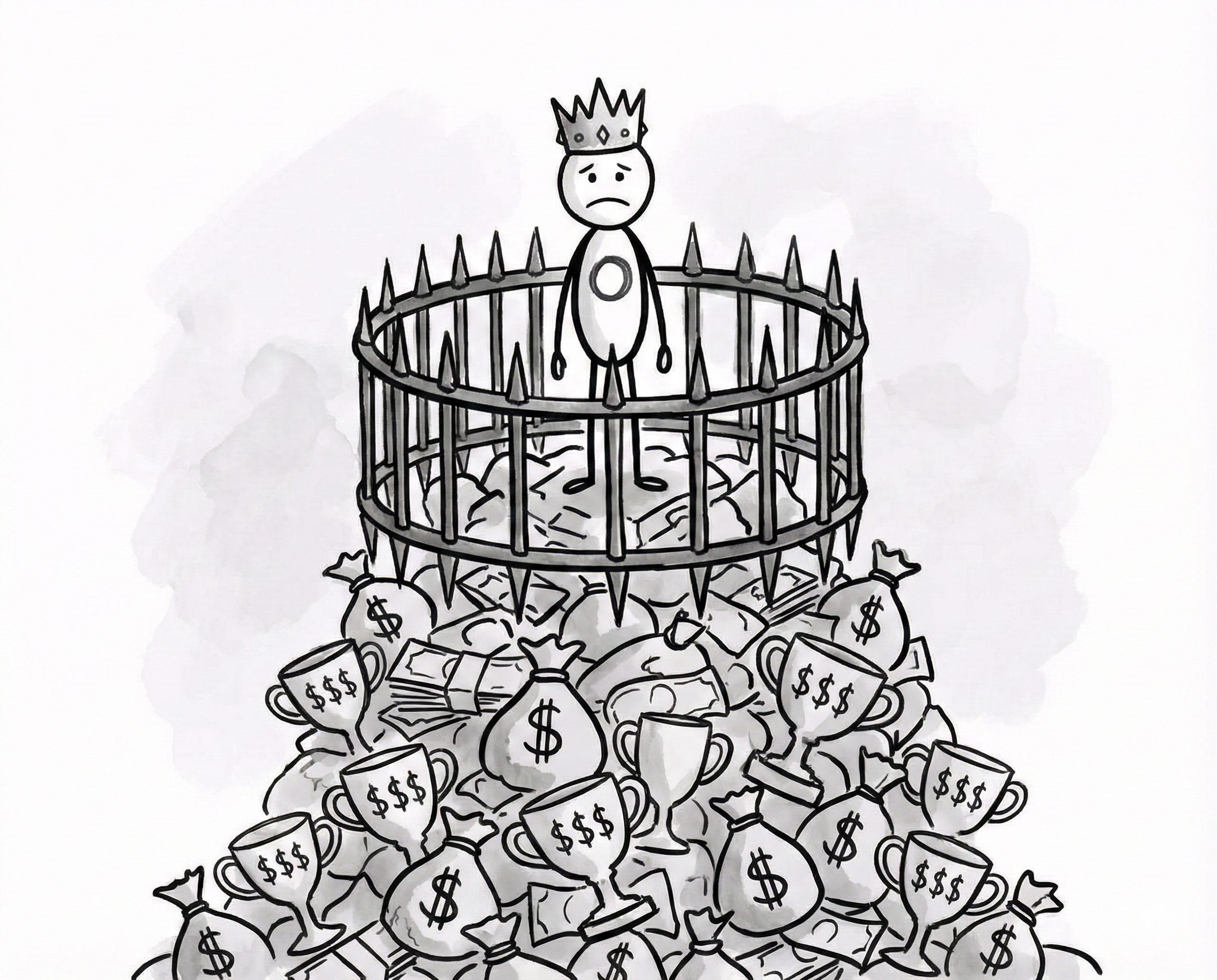
He admitted he adopted “fuck happiness” as a personal mantra years ago because joy felt unattainable. So he settled for being useful instead.
This isn’t a story about rich people problems. It’s a warning about where a specific approach to building leads. And it matters most if you’re still early, because you’re still choosing how to build.
Tony Robbins made a distinction in that conversation that I’ve seen play out repeatedly with the people we work with.
He said there are two types of motivation: push and pull.
Push motivation is willpower. Duty. Grinding through because you said you would. It’s waking up at 5am to work on your business before your day job. It’s forcing yourself to post content when you’d rather do anything else. It’s “I have to” and “I should” and “I need to.”
Push works. Hormozi built an empire on it. You can build real things through force.
But push has a cost. It depletes. Every action requires energy output. You’re the engine, and engines need fuel. Stop pushing, it stops moving. Push harder, burn out faster.
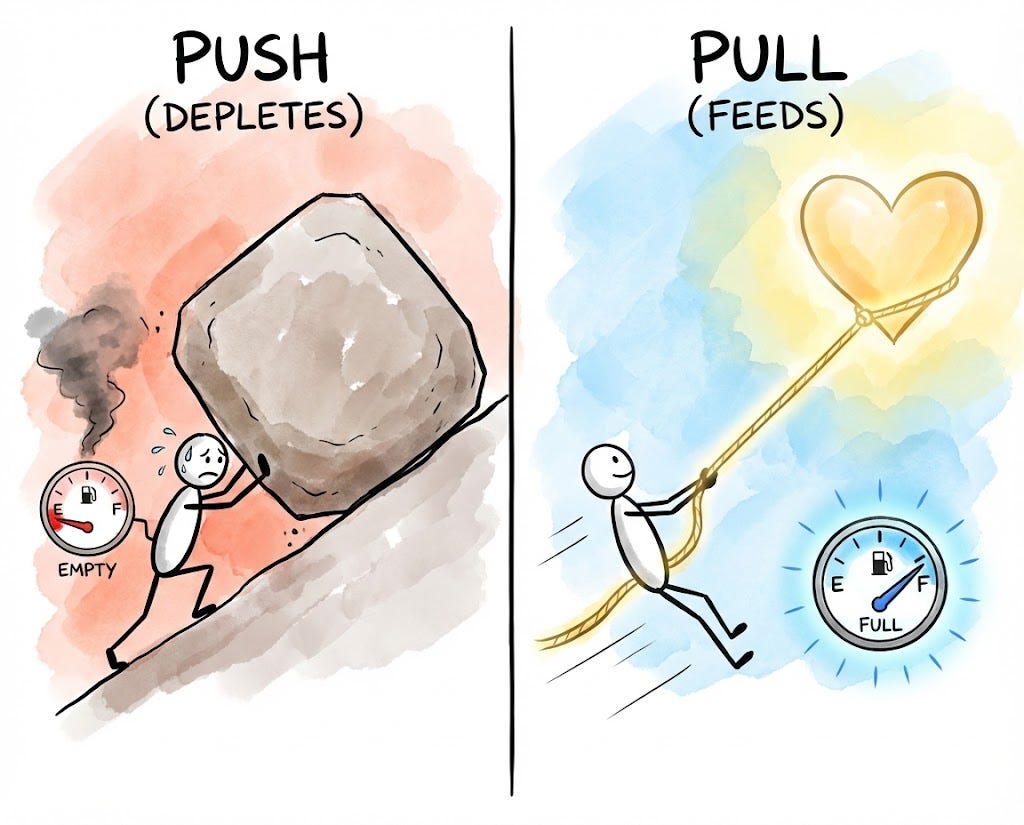
Pull motivation is different. Tony described it as having something you serve that’s larger than yourself. Something that feeds you instead of draining you. Where the work feels less like obligation and more like expression.
“Willpower only goes so far,” Tony told him.
“Pull motivation is where there’s something out there that you want to serve more than yourself that’ll get you up early, keep you up late, and it isn’t hard. It isn’t duty.”
Here’s what I’ve observed.
We work with entrepreneurs at different stages. Some are still in corporate jobs building on the side. Some are grinding through inconsistent months trying to get traction. Some have built profitable businesses and feel inexplicably stuck.
The pattern is consistent enough that I’ll stake my credibility on it: how you build becomes how you operate.
The people who build through pure force tend to stay in force mode. The ones who start by grinding eventually find they can’t stop grinding, even when the external pressure is gone. The “I’ll enjoy it when I make it” crowd rarely does, because they’ve trained themselves that enjoyment comes later. Later never arrives.
This isn’t mystical. It’s neurological. You’re literally training your nervous system in how to relate to your work. Do something repeatedly while feeling obligated and stressed, your body learns that this work equals obligation and stress. That association doesn’t disappear when your revenue hits a certain number. If anything, it deepens.
I’ve watched people quit soul-crushing jobs expecting relief, only to find they recreated the same feeling in their own business within six months. The job wasn’t the problem. The pattern was.
Here’s the limitation of Tony’s example.
His “pull” was feeding a billion people. Literally. He’s built a philanthropic operation that delivers billions of meals, gone undercover to rescue trafficking victims, airlifted food to war zones. When he talks about finding something larger than yourself, he means it at a level most of us can’t touch.
That’s not useful if you’re trying to make rent.
So let me make this practical.
Pull doesn’t have to be a global mission. It can be as simple as actually giving a damn about a specific person you’re trying to help.
One of the clearest differences I’ve noticed between people who sustain momentum and people who burn out: the ones who sustain can describe a real person whose life gets better because of their work. Not an abstract “target audience.” A human being they can picture.
The ones who burn out are usually pushing toward a number. A revenue goal, a follower count, a launch target. Numbers don’t pull. They just measure.
Here’s what pull actually looks like at the early stages: you talk to one person who has the problem you solve, and something in you lights up. Not because you see dollar signs, but because you’ve felt that problem yourself and you know you can help. That’s pull. It’s small, but it compounds.
When you post content from that place, it feels different than posting because you’re supposed to post. When you make an offer from that place, it feels different than making an offer because you need the money. Same action, different source. The first depletes you. The second feeds you.
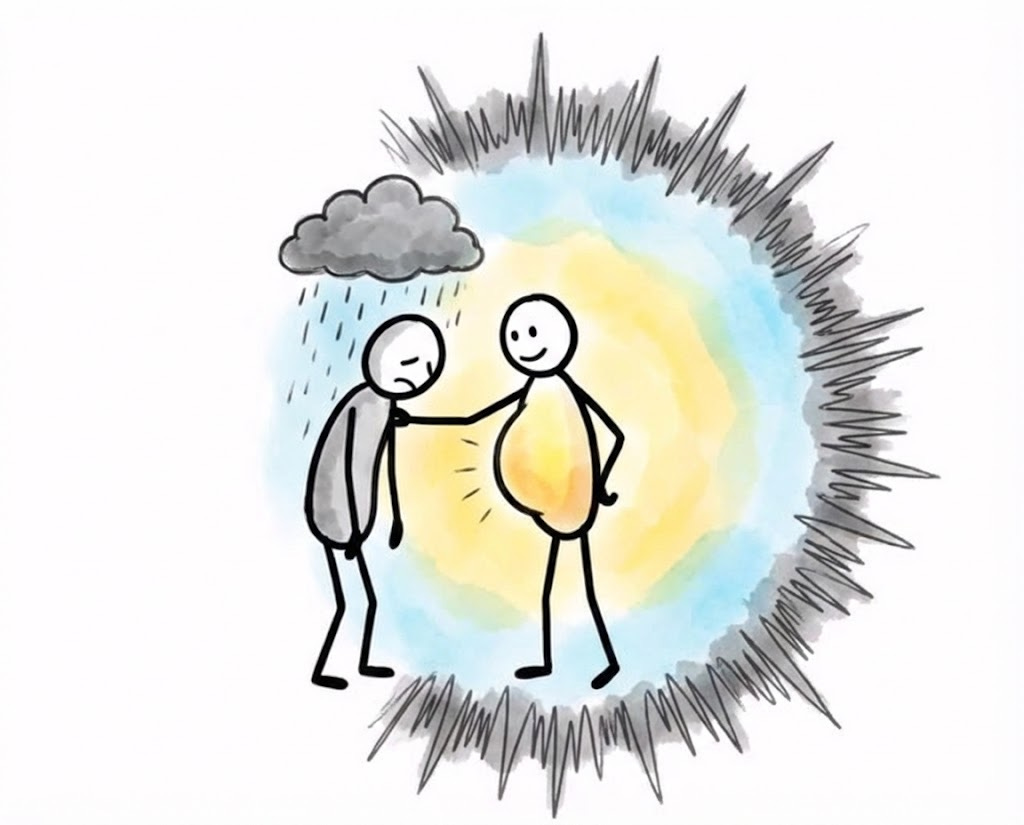
“Does your body contract or expand?” might sound vague. Let me make it concrete.
Think about something you have to do this week for your business. Notice what happens physically when you think about it. Does your chest tighten? Do your shoulders creep up? Does your breathing get shallow? That’s contraction. That’s push.
Now think about a conversation you had recently where you actually helped someone. Or a piece of content you created that you were proud of. Notice that physical state. Usually there’s more space in the chest, shoulders drop, breathing deepens. That’s expansion. That’s pull.
This isn’t woo-woo. It’s your nervous system giving you feedback about your relationship to the work. And that feedback matters, because it predicts whether you’ll sustain the action long-term.
You can push through contraction for a while. You cannot push through it forever. Your body will eventually refuse. That’s called burnout, and it’s not a character flaw. It’s a signal you’ve been running on the wrong fuel.
So what do you actually do with this?
I’m not going to pretend there’s a simple three-step process to finding what pulls you. If there were, Hormozi would have bought it already.
But I can tell you where to look.
Start with what pisses you off. Not mild annoyance. The thing that makes you actually angry when you see people struggling with it unnecessarily. That anger is usually connected to something you’ve experienced yourself. And that connection is often where pull lives.
Ask yourself who you would help for free, and have helped for free, not as a marketing strategy but because you couldn’t help yourself. That’s data.
Notice when time disappears. Not when you’re numbing out on Netflix, but when you’re working on something and suddenly two hours have passed. What were you doing? That’s data too.
Pull doesn’t announce itself. It’s more like a consistent low-grade interest that keeps showing up no matter how many times you try to be practical and focus on what’s profitable.
The irony is that building around pull is often more profitable long-term than building around pure strategy. Because you actually sustain it. Because it doesn’t require constant self-coercion. Because people can feel the difference between someone who’s serving and someone who’s selling.
I want to come back to Hormozi because the point isn’t to trash him.
The point is that he followed the dominant advice exactly and still ended up asking the question you probably think success would answer: “Is this it?”
He’s now trying to reverse-engineer meaning into a machine that was built without it. It’s possible. But it’s harder than building it in from the start.
You’re at the start. Or at least, likely earlier than he was when he asked that question.
Push will be part of your building. There’s no version of entrepreneurship that’s effortless. You will have to do hard things, things you don’t feel like doing, things that require discipline.
But push should be in service of something that pulls. The discipline should support the devotion, not replace it.
Hormozi is figuring this out now, publicly, with resources most people will never have. That’s useful to watch.
But here’s the tension I keep coming back to:
What if you don’t have the luxury of pull yet? What if right now, push is all you’ve got because the bills are real and the pressure is immediate?
My working answer is that even in survival mode, you can start noticing what feeds you versus what just gets done. You’re not choosing between push and pull. You’re looking for the thread of pull inside the push. The one client conversation that lights you up. The one topic you’d talk about even if nobody paid you.
That thread is usually there. Quiet, but there.
It took a tumor in my neck and a 50/50 cancer diagnosis before I finally heard mine. Here's that story →
But I’m curious where you are with this. Are you in full push mode right now? Have you found something that pulls? Somewhere in between?
Happenings
Automated Intimacy
I’ve been writing about engagement on Substack for months now. And recently, the 15-20 minute notes daily rhythm. The three layers. Building real relationships instead of grinding for metrics.
But there’s a piece I haven’t shared publicly yet.
We’ve been testing a more targeted approach with a handful of clients. Using subscriber behavior data to identify who’s actually ready for a conversation, then reaching out with messages that feel personal because they are personal.
Not cold outreach. Not spray and pray. Genuine connection, informed by what someone’s already telling you through their actions.
When a subscriber opens every email, clicks within hours, comes back to re-read the same post twice, and runs a business that fits what you offer, that’s not a stranger. That’s someone raising their hand. Most creators never see the signal because the data isn’t surfaced in obvious ways.
We figured out how to see it. And we’ve built outreach templates around what we’re finding.
The results feel different than typical “sales” conversations. Because you’re not convincing anyone of anything. You’re starting a conversation with someone who already trusts your work. You just didn’t know they existed.
We’re looking for 5 Substack creators to go through this process as case studies.
Not a course. Not a template dump. We’ll work with you directly: the data strategy, the outreach approach, the messaging that’s working for us right now. You’ll need an established publication and something to offer. This is for people who want to turn readers into clients without feeling like they’re “doing sales.”
We’re putting together the cohort this week. If this resonates, book a call and let’s talk about whether it’s a fit.
Substack Live with Bob Burg
Friday, February 6th at 10am Eastern.
We’re hosting Bob Burg for a special Author Spotlight conversation about his international bestseller, The Go-Giver. The book has sold over 1.5 million copies and been translated into 30 languages. It was rated #10 on Inc. Magazine’s list of The Most Motivational Books Ever Written.

If you’re not familiar with it, The Go-Giver is a business parable built around Five Laws that flip conventional “get ahead” thinking on its head. The core premise: shifting your focus from getting to giving is not just more fulfilling, it’s more profitable.
This aligns so closely with what we teach about serving before selling that we had to get him in front of you.
One idea from the book that I want to dig into: “Does it make money?” is not a bad question. It’s a great question. It’s just a bad first question.
That single reframe changes how you think about everything you build.
Bob also publishes the Daily Impact on Substack, a brief daily message on professional success and personal fulfillment. Worth subscribing to before the interview so you get a feel for how he thinks.

Who We Are Celebrating This Week: Nikki Kountouriotis

Nikki Kountouriotis shared something in our community that stopped me in my tracks.
She did a subconscious rewiring exercise, sat with the tightness and frustration she was feeling in her business until the image dissolved and the feeling left her body. Ten minutes. Then she wrote a Substack note about finding her people. No expectations, just following guidance.
Her inbox exploded. Comments, likes, new followers. Over 60 subscribers from one note. More than she’d gained in the previous 30 days combined.
But here’s the part that matters most. When the thought “this is too much” popped up, she noticed it, thanked it, and took a break. Not forcing. Honoring her energy. Letting her body lead.
Her words: “The important thing to me right now isn’t that I’m gaining traction. It’s how I’m showing up for myself in the process.”
This is what it looks like when inner work creates outer results. And when you don’t abandon yourself the moment things start working.
Check out the note that started it all:
Things I’d Like to Share
The Alex Hormozi and Tony Robbins Session That Inspired This Essay
Why Complexity is Your Superpower
Mia Kiraki 🎭 writes about AI and creative work, and this essay with The Strategic Linguist really stoked my own creativity.
The premise: when people can’t easily explain what you do, they hesitate. Your diverse skills unintentionally whisper “jack of all trades” unless you show how they form one integrated solution.
The fix: six AI rituals that help you find the hidden patterns connecting your scattered interests. Not by simplifying who you are, but by revealing the throughline you couldn’t see yourself.
I loved the Vision Dump concept so much we shared it in our Sacred Planning Rituals Challenge Group thats currently in session. Our members absolutely loved it too. Several people ran the first ritual and were genuinely surprised by what the AI found connecting their “random” obsessions.


If you’ve ever felt like your brain has too many tabs open to fit into a neat business plan, this one’s for you. And in case you are curious, my buckets were:
Channeling, Building Containers, Moving the body as worship, Being witnessed, Bridging worlds, Tending the garden.
Give it a try!

AUTHOR SPOTLIGHT: DR. KELLY FLANAGAN
We loved our first conversation with Dr. Kelly Flanagan so much we brought him back for a special Author Spotlight on his upcoming book, The Road Less Triggered.
The core insight that grabbed us: connection doesn’t break down between people. It breaks down within them.
He spent five years developing a framework for what Michael Singer’s quote couldn’t teach him how to do:
“Do not let anything in life be important enough that you’re willing to close your heart over it.”
The stat that stopped me: your body gives you 80% earlier warning that your heart is about to close than your thoughts or behaviors do. You can learn to catch it before you’ve already shut down.
If you’ve ever wanted connection while simultaneously protecting yourself, and wondered why that wasn’t working, this one’s for you.
Notes We Loved This Week
Memorable Quote
“There’s an awful lot of self-help where people would say, push yourself to do the thing and I don’t think that works, because it turns life into a fight, and nobody likes to spend their lives fighting with themselves”. - Oliver Burkeman
If you’re stuck between “I need to push harder” and “this isn’t sustainable,” you’re not confused. You’re at a decision point.
That’s what the Integration Call is for. 30 minutes to look at what’s actually happening, what patterns are running, and what would move you forward without burning you down.
P.S. You can read all previous editions of the newsletter here, and you can upgrade your subscription here.
I am happy to say a single note contributed to almost 200 new subscribers. Because I didn't force myself to sit and ambitiously reply to each one until I was burnt out, the flow continued. Thanks for sharing my experience here in your article. Being awake and aware of how we honor our energy is the most effective manifestation method anyone could implement. It's not hard; it's a matter of doing things differently than you have in the past. And for me, that is pushing through because I am hyper-focused and determined to get it done, even as I burn out.
it was an interesting interview to watch