


This past weekend Phil and I were in a sound healing training.
It was held inside a beautiful construction, shaped like a dome. Everywhere you looked there was a rich detail. Nothing was left to chance. You could see how much thought had gone into it, how much love and care, how every element had been chosen on purpose.
Around us were many instruments. Some I had never seen before and still can’t name.
There was a set of bowls made from seven different metals. And a hand drum so gorgeous it stopped me. More than how it was built, what called my attention was the tuning. Hours and hours of someone’s work in that alone.
Some of the drums were made through ritual and carried a long distance to get there. The djembe was built from wood ordered all the way from Africa.
There was a rainstick, hand carved. I don’t know how many hours it takes to make something that beautiful. Days, probably.
One instrument had been made by the teacher himself.
He orders the strings from Japan. The small pieces come from Europe. The wood is a specific, high quality one, all cut by hand. It takes so long to build one that he can’t make more than one a month.
Why am I sharing this?
Because everything in that room, put together, was worth thousands and thousands of dollars. But the money was the smallest part of it.
What filled that room was the hands of many artists. The hours of many humans working in pure love with their craft. You could feel it. It was alive. Not only from the sound, but from every choice of material. The story behind every piece.
Nothing was plastic. Nothing was about quantity. Everything was about quality.
The drums were made with natural leather. In every step of building, the relationship with the earth was honored. Nothing was rushed. In that room there was no space for the ready to consume, the fast produced, the cheap.
Hold something plastic in your hands and notice how it feels. Then hold something carved from wood and notice how that feels.
It is a completely different energy.
It made me pause and ask myself a question I want to ask you too.
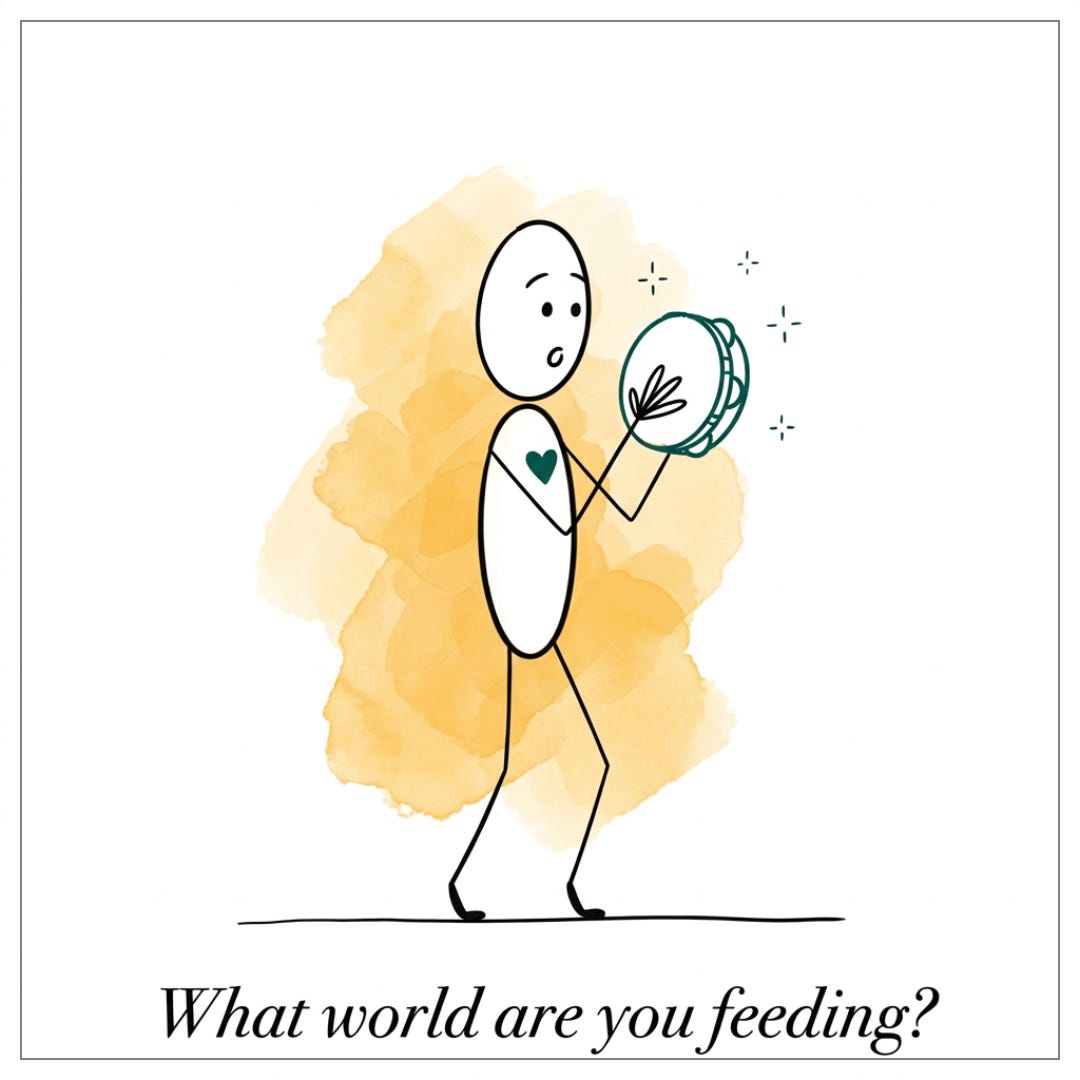
What world are we contributing to?
Because good things take time. They cost energy, they cost hours, they cost money. I have come to believe we need fewer things, but of much better quality.
And every time we choose the cheaply made, the fast produced, the plastic, we are feeding a world that I don’t think any of us really want to live in.
There was a sound healer in that training who already charges for his sessions. Sound healing is not his only source of income.
He had invested a few thousand in the training and bought a few new instruments. And he told me: here I am, paying all of this, and the most I can charge is around $100 dollars.
People won’t pay more, he said.
This is not about a sound healing session. It is not even about how much his time is worth. What it made me think about is how much incoherence lives in our daily choices when they are guided by an unhealthy relationship with money.
I see it often with gifted practitioners. The inner fight to charge good money for something so valuable.
People struggle to charge in a way that can sustain their work. And they struggle to pay in a way that sustains the work of others too.
There is a race to the bottom, and whoever charges the least, or nothing at all, wins the prize of being generous. Is that helping anyone?
I don’t mean the person who truly can’t right now. Some limits are real. I mean the rest of us, who could, and still don’t.
I don’t think money is the problem. I think our relationship with it is. We were made to believe money is evil, that wealthy people are greedy.
But is that true? We live in a world where we need money to live. So if we need it anyway, how can we use money to build the world we actually want?
I want to build a world where I can support the handmade, the organic, the rituals, the people who took the time to build something, the artisan, the plants that were not poisoned to grow fast.
And that begins with valuing someone else’s work.
What if more of us could afford quality things, because more of us were choosing to pay for them? When I pay well, the maker can keep making. And they can pay well too.
The care keeps moving.
I learned once that I would only be able to charge premium for my work if I was willing to pay premium for someone else’s.
This is true.
I believe in accessibility. But I don’t think we are playing this game right. It was never about making the good thing cheaper. It was about building lives where more of us can actually afford the good thing, without asking the maker to bleed for it.
What if the question is not how do I charge less, but how can we all make more?
Because healing our relationship with money is tied straight to building a world that can last.
It is not sustainable to eat food with nothing left in it. Real food takes more time, more hands, more land.
It is not sustainable to keep making plastic the way we do, while good wood costs more, because it is not endless and does not grow fast.
It is not sustainable to work two or three jobs, sixty hours a week, just to cover the basics.
None of these are separate problems.They grow from the same root. A world that wants everything cheap and fast, and forgets what that costs.
A machine can make a thousand things in a minute, so one of them can be sold for a dollar. No hands in it, no hours, no story. That is what this race to charge less is doing to us.
Money runs through all of it.
So I come back to the same question. What world are you contributing to? Maybe it begins in the business you are building: in what you let yourself charge, what you are willing to pay, and what your choices make possible for the person on the other side.
With Love,
Carolina
You may recognize the tension being named here: wanting to serve with integrity while building a business that can actually sustain the work.
The Harmony Map Assessment helps you see where your inner values and outer business may have fallen out of coherence, what is creating friction, and where your attention belongs next.
Free • 8 minutes • Immediate personalized results
Take the Free Harmony Map Assessment →
See the pattern. Find the friction. Know where to begin.
Who we’re celebrating:
Miguel Kuntur Antino
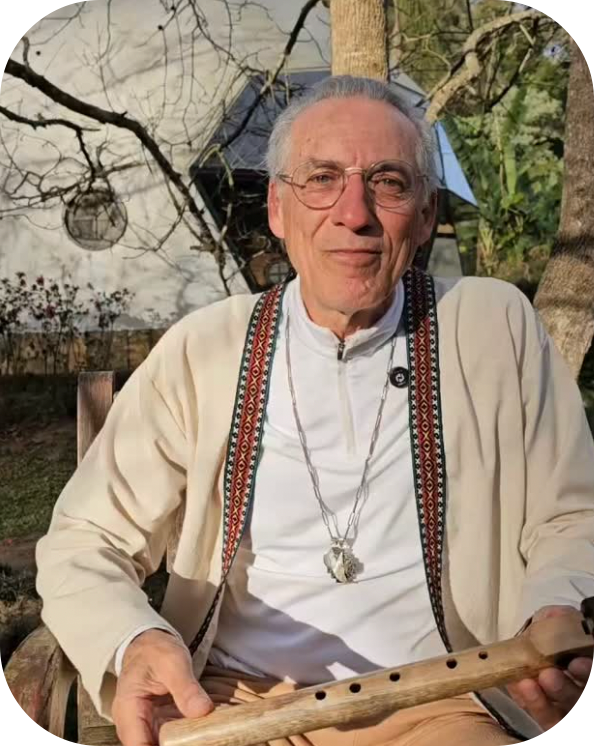
I am celebrating a man devoted to service and love.
They say we are the average of the five people we surround ourselves with. I want to be surrounded by people like him.
He was our sound healing teacher this past week, and I don’t have words for how much he inspired me. Not only through his teaching, but through who he is.
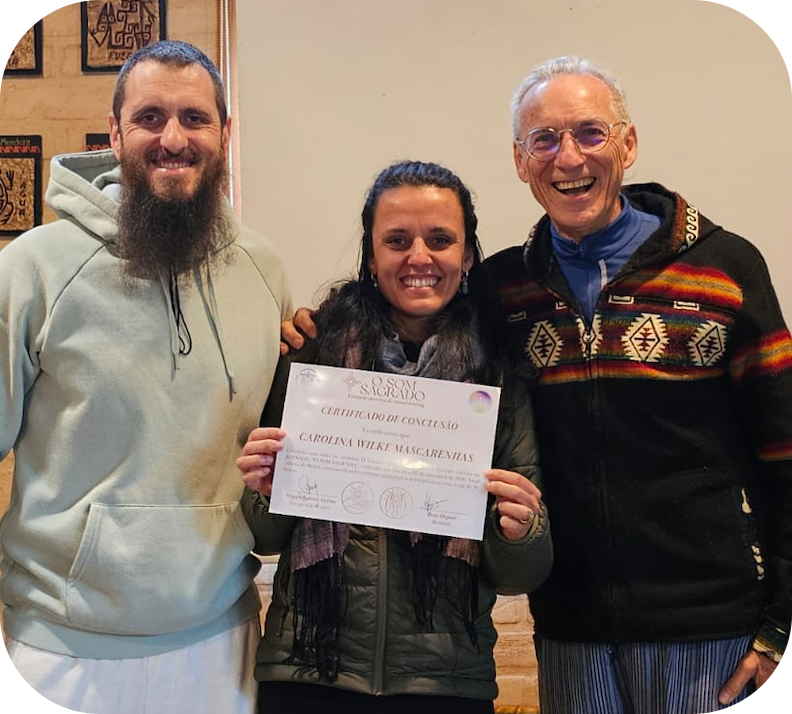
He has built a successful business anchored in his values, grounded in his respect for Mother Earth and the Great Spirit.
Our businesses are built on similar values. And I love seeing more proof that a real business can be built on integrity, love, and alignment.
It confirms my own path, and I am sure the path of many of you reading this. Money for its own sake was never the goal. We need it, we want it, and still, value and integrity sit at the center.
Celebrating more of that, on this beautiful planet we share.
Way to go, Miguel. Thank you for all of it.
The Weekly Highlights
Sitting on a Bench: Our conversation this week on Self-Authorization
If building a business were easy, far more people would be doing it. I know many more people who want to build one than people who actually do.
Self-authorization is a big part of why. It stops people before they start.
And it is rarely one decision made on one day. It is a slow opening. A softening of a system that has spent years running on external validation, waiting for someone else to confirm we are allowed.
Building a business is not easy. But it is deeply fun, and the life you build around it is even better.
So if you already have a business and you want to take it to the next level, or if you simply carry the desire to build one, this conversation is for you.
The Certification Nobody Can Give You

Many thoughtful, accomplished people are carrying more gifts than their business knows how to hold. The result can be a strange mix of possibility and exhaustion: many things you could offer, but no clear doorway through which people can enter.
“I’m going back to working a job”

This morning, I followed up with someone I have known for about two years.
Also this week: if you’re building your audience here on Substack, I broke down how SEO for Substack actually works — worth a read if organic growth is on your mind.
Memorable Quote
Argue for your limitations, and sure enough, they're yours.
Richard Bach

Brilliantly put Carolina. We have learned that everything has to be quick and cheap. The art of making something beautiful is being lost because no one wants to wait when a machine can churn imitations out in minutes. What a beautiful art for you and Phil to learn too ❤️
Oh Carolina, as a healer and Sound Healer of 37 years, I am deeply touched by your deep appreciation of your experience and of your teacher. And, I have so much to say about where we are headed, it’s just too long for my fingers here..lol!